Escaping Danger in Port-au-Prince
Max C. Sconyers Jr. traveled to Haiti with good intentions. What followed was a thirty-day journey involving injury, armed confrontation, kidnapping, violence, rescue, and a fight to return alive.
Buy on AmazonWhen an Intended Mission Becomes a Fight to Return Home
Port-au-Prince is a city filled with history, movement, culture, relationships, hardship, and resilience. For Max C. Sconyers Jr., the Haitian capital also became part of a journey in which uncertainty could become danger without warning.
His experience of escaping danger in Port-au-Prince forms part of the larger story told in Killing Haitians: A Mission Through Hell & A Haitian Love Story. The book recounts what happened during thirty days in Haiti and how a well-intended journey almost cost Max his life.
This is not a fictional thriller constructed around an invented escape. It is a memoir built from personal memory and other firsthand Haitian experiences. The people were real, the threats carried consequences, and survival was never guaranteed.
Inside a Journey That Turned Violent
A traveler may arrive with plans, expectations, and confidence in his ability to make decisions. Those assumptions can disappear when another person introduces a weapon, removes freedom, or decides where the traveler will be taken.
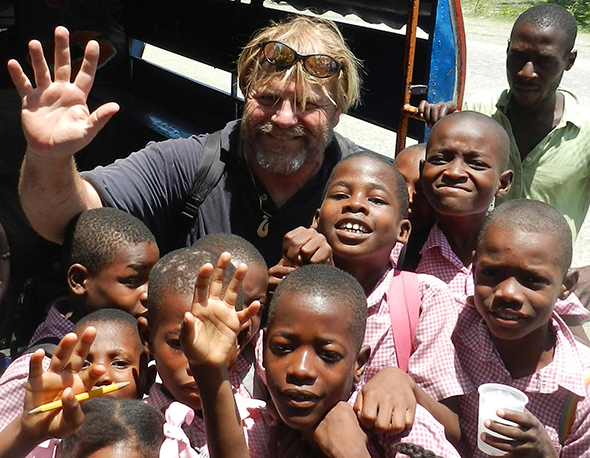
During his time in Haiti, Max received two bloody noses, was held at gunpoint, kidnapped, and later rescued. He also witnessed two Haitians being beaten and killed. These experiences transformed the journey into something he would continue carrying long after leaving the country.
Max tells the story from the perspective of someone inside the confusion. He could not know how each confrontation would end or whether help would arrive. That uncertainty gives the memoir its tension and its emotional weight.
Danger, Captivity, and Rescue
The journey was not defined by a single frightening moment. It involved a progression of experiences that removed Max’s control and made his safety dependent on the decisions of other people.
Held at Gunpoint
A weapon changes every calculation. The question is no longer how the journey should proceed, but whether the traveler will be allowed to leave.
Kidnapped
Being taken against one’s will creates a terrifying uncertainty in which time, direction, intention, and the possibility of escape become unknown.
Rescued
Survival may depend upon people willing to intervene. Rescue reveals the human courage that can appear even within a journey marked by violence.
More Than an Escape Story
Escaping danger in Port-au-Prince provides the immediate tension within Max’s account, but the memoir reaches beyond the mechanics of getting away. It examines the man who entered Haiti, the relationships he formed, and the inner turmoil he carried into the experience.
Max describes himself as a man who was out of control in his mind, even though he was well-intended in his heart. That honesty prevents the memoir from becoming a simple story about a perfect hero overcoming an unfamiliar place. His own vulnerability, mental state, and decisions are part of the narrative.
The external danger was undeniable, but not every conflict came from outside. The journey forced Max to confront his fears, motives, relationships, and understanding of himself. Physical rescue brought him out of immediate danger, but it could not instantly resolve what the experience left behind.
One Person’s Experience Does Not Define an Entire City
This memoir records events from a particular journey. Port-au-Prince and Haiti cannot be reduced to danger alone. The story also includes human connection, assistance, affection, courage, and the actions of people who helped Max survive.
The People Within the Story
Travel accounts can become misleading when local people are treated as scenery or when an entire country is defined by the worst event a visitor experienced. Killing Haitians presents a more difficult picture. The people around Max had their own fears, relationships, pressures, loyalties, and choices.
Some encounters brought violence and fear. Others brought protection, companionship, and rescue. The contrast matters because the full title describes both A Mission Through Hell and A Haitian Love Story. Brutality did not eliminate the possibility of affection, loyalty, and meaningful connection.
The Haiti Max encountered contained natural beauty and tremendous hardship. It could not be explained through a vacation postcard, but it also could not be honestly represented through danger alone.
What It Means to Escape
Escape is usually described as the moment someone reaches safety. A door opens, help arrives, or the person is removed from immediate danger. For the survivor, however, escape may continue long after that moment.
Memories of weapons, captivity, physical injury, and witnessed violence do not disappear simply because the traveler returns home. The body may be safe while the mind continues revisiting what happened. Questions about judgment, responsibility, survival, and loss can remain unresolved.
This is why escaping danger in Port-au-Prince is only one part of Max’s story. The deeper journey involves understanding what he witnessed, why it affected him so profoundly, and how peace might still be possible after an experience he describes as a mission through hell.
A True Account With the Tension of a Thriller
Readers of survival memoirs often know that the author lived—the existence of the book reveals that much. What remains uncertain is how survival happened and what it required. Each decision, confrontation, and relationship becomes meaningful because the outcome was not assured while the events were unfolding.
In fiction, an author controls the timing of danger and rescue. Max had no such assurance during his time in Haiti. He did not know whether the next person would help him, threaten him, or change the direction of the journey entirely.
That reality makes Killing Haitians compelling for readers drawn to dangerous travel accounts, Caribbean memoirs, Christian social issues, kidnapping survival stories, and emotionally honest narratives about what people carry home after facing death.
Killing Haitians: A Mission Through Hell & A Haitian Love Story
Follow Max C. Sconyers Jr. through thirty days of danger, kidnapping, rescue, witnessed violence, human connection, and personal reckoning in Haiti.
Buy Paperback or Kindle on AmazonThe audiobook purchase option will be added when online ordering becomes available.