Dangerous Travel Firsthand Accounts
During thirty days in Haiti, Max C. Sconyers Jr. was injured, held at gunpoint, kidnapped, and rescued. His memoir preserves what happened through the perspective of someone who lived inside the danger.
Buy on AmazonWhat Happens When Travel Turns Dangerous?
Most journeys begin with plans. Travelers choose a destination, arrange transportation, pack what they believe they will need, and imagine how the experience might unfold. Danger destroys that sense of control. A familiar plan can suddenly become irrelevant when violence, confusion, or the actions of another person take over.
Dangerous travel firsthand accounts allow readers to experience those moments through the words of the people who were actually there. Unlike fictional adventures, real accounts carry the uncertainty of events that had no guaranteed ending. The traveler did not know that rescue would come or that there would eventually be a safe place from which to tell the story.
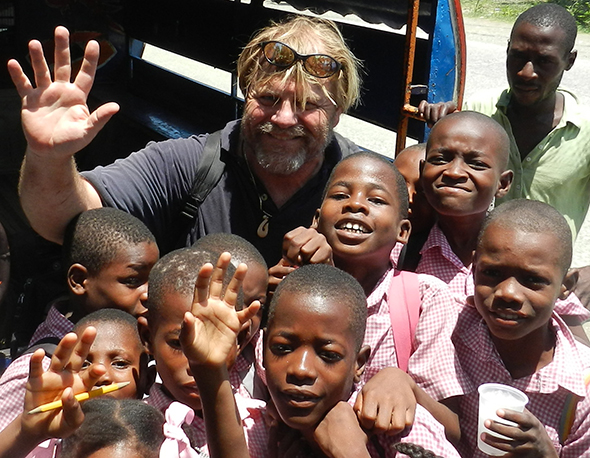
In Killing Haitians: A Mission Through Hell & A Haitian Love Story, Max C. Sconyers Jr. recounts thirty days in Haiti that nearly cost him his life. His account is direct, personal, and shaped by both what happened around him and what was happening within him.
A Trip That Almost Cost Him His Life
Max entered Haiti with good intentions, but he describes himself as being out of control in his mind. That personal admission creates an important foundation for the memoir. He was not an invulnerable adventurer moving effortlessly through unfamiliar territory. He was a complicated and vulnerable man entering circumstances he could not predict.
During the trip, Max received two bloody noses, was held at gunpoint, kidnapped, and eventually rescued. He also witnessed two Haitians being beaten and killed. Each event became part of a journey that continued to affect him after the immediate danger had passed.
The account moves beyond a simple sequence of dangerous events. It explores the people Max encountered, the choices made under pressure, and the emotional and spiritual consequences of surviving experiences others did not.
Four Realities Within the Journey
The danger Max describes was not limited to a single confrontation. Different threats unfolded across the trip, creating a firsthand account shaped by injury, captivity, violence, and unexpected intervention.
Why Firsthand Accounts Carry Greater Weight
A news report can summarize an event in a few sentences. It may identify where something happened, how many people were involved, and whether anyone survived. What it cannot fully communicate is the experience of being trapped inside that moment.
Dangerous travel firsthand accounts preserve the confusion that exists before a threat becomes clear. They show how decisions are made without complete information and how quickly ordinary expectations can disappear. They also reveal the physical and emotional details that are usually lost when an experience is reduced to a headline.
Max writes with knowledge that could only come from living through the journey. He remembers not simply that danger occurred, but how it entered the trip, how people responded, and how survival sometimes depended on circumstances beyond his control.
A Memoir, Not a Travel Warning
Killing Haitians is not presented as a guide for judging an entire nation or its people. Haiti is a complex country, and Max’s experiences belong to a particular journey during a particular period of his life. His memoir records what he witnessed without claiming that every traveler will share the same experience.
The Human Beings Inside the Story
Dangerous travel narratives can become distorted when a destination is treated merely as a frightening backdrop. Max’s story is more complicated. The people he encountered were not scenery. They were individuals with relationships, motives, fears, loyalties, suffering, and the ability to harm or help.
His account includes shocking violence, but it also includes rescue, human connection, and what the title describes as a Haitian love story. Haiti appears as a place of tremendous hardship and beauty, where brutality and compassion can exist within the same journey.
This tension matters. A truthful account cannot be reduced to a simple division between one heroic traveler and a dangerous foreign place. Max openly acknowledges his own state of mind and vulnerability. His struggles were not all imposed upon him from the outside.
Surviving the Event Is Not the End
Physical rescue creates a clear dividing line: the immediate threat has ended, and the survivor is alive. Emotional survival rarely follows such a clean schedule. Memories, guilt, fear, grief, anger, and unanswered questions can continue after the traveler returns home.
Witnessing violence can permanently alter how a person understands safety and human suffering. Surviving when others did not may produce gratitude, but it can also create difficult questions about responsibility, chance, and why one life was spared.
Max’s memoir reaches beyond the mechanics of escape and rescue. It considers the personal reckoning that followed and the search for peace after a journey through conditions he describes as hell.
What Readers Find in Dangerous Travel Firsthand Accounts
The value of a firsthand narrative is not limited to suspense. These accounts can challenge assumptions about travel, safety, judgment, cultural differences, and the limits of personal control.
No Guaranteed Ending
The person living through the event does not know whether the next choice will lead toward safety or greater danger.
The Limits of Control
Preparation matters, but survival may ultimately depend on another person’s actions, courage, mercy, or intervention.
What the Traveler Carries Home
The journey may end geographically while its emotional and spiritual effects continue for years.
An Unfiltered Story of Danger, Rescue, and Reflection
Readers interested in dangerous travel firsthand accounts will find more than an adventure in Killing Haitians. The memoir combines the tension of a survival story with reflection on mental turmoil, personal relationships, violence, faith, and the difficult process of making sense of what happened.
The story does not depend on an imagined villain or a manufactured cliffhanger. Its power comes from real uncertainty. During those thirty days, Max could not know that he would survive to write the book. The reader, however, can follow the entire journey through the words of the man who returned.
Killing Haitians: A Mission Through Hell & A Haitian Love Story is for readers drawn to survival memoirs, Caribbean travel narratives, Christian social issues, firsthand international experiences, and stories in which danger exposes both human cruelty and human courage.
Killing Haitians: A Mission Through Hell & A Haitian Love Story
Follow Max C. Sconyers Jr. through thirty days of danger, kidnapping, rescue, violence, human connection, and personal reckoning in Haiti.
Buy Paperback or Kindle on AmazonThe audiobook purchase option will be added when online ordering becomes available.